The Eastern Mediterranean at a Crossroads: Inside Stratia’s Analysis of the Greece, Türkiye and Libya CrisisΗ Ανατολική Μεσόγειος σε σταυροδρόμι: Μέσα στην ανάλυση του Stratia για την κρίση Ελλάδας, Τουρκίας και Λιβύης
How Stratia examined one of the Eastern Mediterranean’s most consequential geopolitical developments, developed competing strategic responses, and identified the diplomatic and operational developments that could shape the weeks ahead.Πώς το Stratia εξέτασε μία από τις πιο κρίσιμες γεωπολιτικές εξελίξεις στην Ανατολική Μεσόγειο, ανέπτυξε εναλλακτικές στρατηγικές απαντήσεις και εντόπισε τις διπλωματικές και επιχειρησιακές εξελίξεις που μπορεί να διαμορφώσουν τις επόμενες εβδομάδες.
Listen on the goΑκούστε εν κινήσει
A New Strategic Challenge in the Eastern Mediterranean
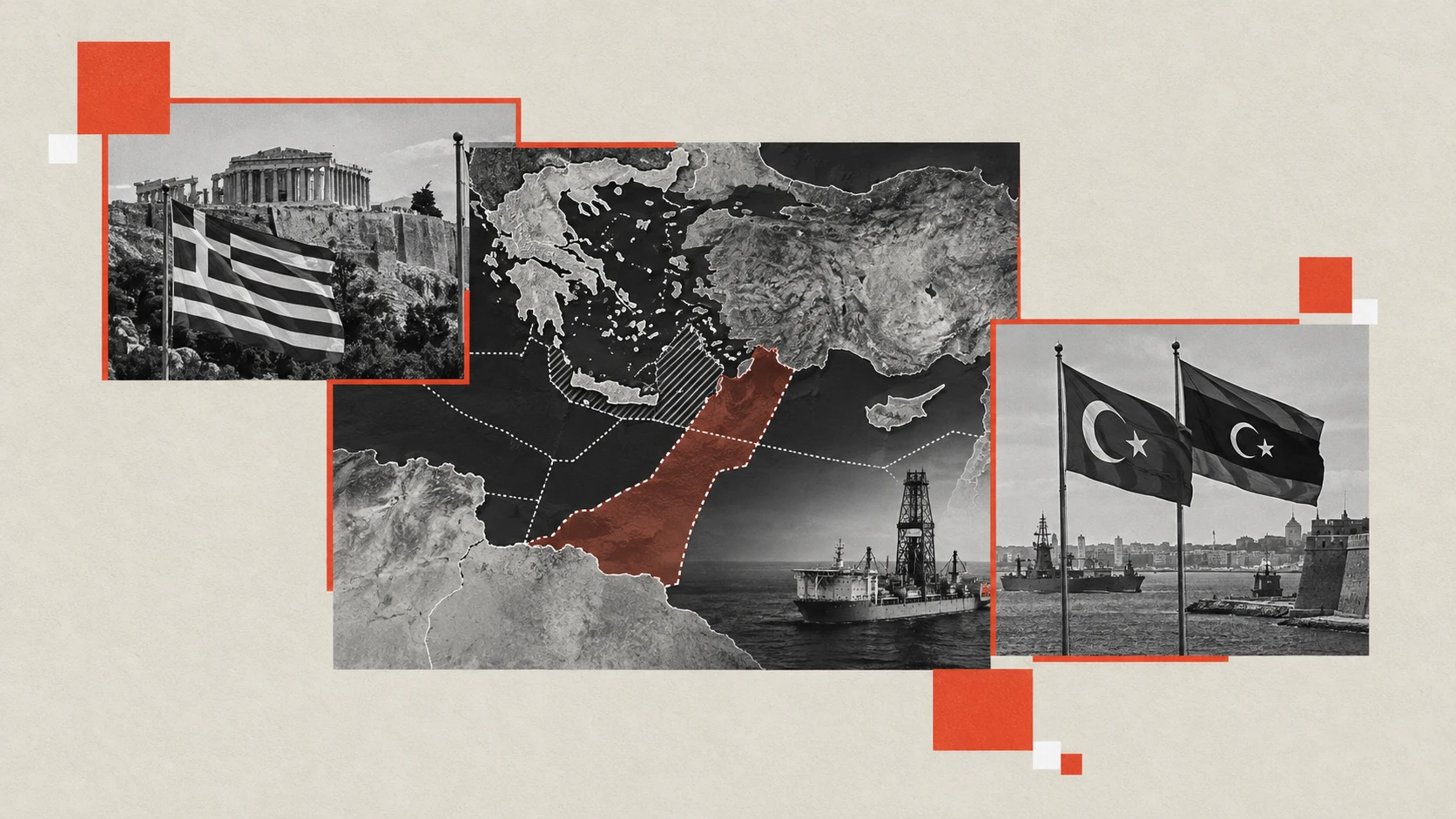
On 20 October 2026, Libya’s eastern parliament approved the controversial 2019 maritime agreement with Türkiye, reversing years of opposition and introducing a new dimension into the geopolitical competition in the Eastern Mediterranean.
The decision immediately raised questions about the future of maritime jurisdiction, regional alliances, energy exploration and the security of strategic infrastructure. Greece rejected the agreement, arguing that it disregards the maritime entitlements of Greek islands and infringes upon the sovereign rights of other countries.
But the most important question was what might happen next.
Would the agreement remain a diplomatic instrument, or would Türkiye and Libya move toward practical implementation? How would Greece respond? What role would Egypt and European institutions play? And could the situation develop into a broader maritime confrontation?
These questions formed the basis of Operation Broken Meridian, a strategic crisis exercise conducted using Stratia, the advanced AI strategic intelligence and decision support system developed by Stratia Labs.
Through its Hercules analytical engine, Stratia examined the crisis across diplomatic, political, economic, legal and security dimensions, assessing the interests of the principal actors and identifying the developments most likely to influence the regional situation.
One of the central findings was that the greatest strategic challenge might not come from an immediate military confrontation, but from the gradual implementation of contested maritime claims through diplomatic, administrative and commercial activities.
The assessment also emphasized the importance of Egypt, the European Union and Greece’s wider regional partnerships in shaping an effective response.
The Three Strategic Options Developed by Stratia
As part of its assessment, Hercules developed three distinct Military Response Options, examining their potential effectiveness, limitations and associated risks.
MRO 1: Legal and Diplomatic Consolidation
The first approach focused on strengthening Greece’s international legal position and consolidating diplomatic support, particularly from Egypt, Cyprus and European institutions.
Its objective was to increase the political and legal cost of implementing contested maritime claims by establishing a coordinated international response.
Hercules considered this approach particularly relevant because the immediate crisis was political and diplomatic rather than military.
However, the system also identified an important limitation: diplomatic statements alone would not necessarily influence practical developments unless they were followed by substantive international commitments.
MRO 2: Commercial Resilience and Verification
The second approach emphasized maritime monitoring, reliable intelligence, legal documentation and the protection of commercial and infrastructure activities.
Its central purpose was to ensure that developments in disputed maritime areas could be accurately identified, verified and assessed before they influenced strategic decisions.
The analysis recognized that infrastructure projects, commercial operators and maritime research activities could face significant uncertainty even without an armed confrontation.
Maintaining commercial confidence while protecting legal positions was therefore considered an important strategic priority.
MRO 3: Conditional Deterrence and Protective Readiness
The third approach examined the possibility of establishing clearly defined and proportionate responses to verified developments.
It emphasized protective readiness, legal authorization and carefully controlled escalation.
Hercules identified the importance of maintaining credible capabilities while avoiding premature actions that could unintentionally increase tensions between Greece and Türkiye.
The option remained conditional on confirmed legal authority, available resources and reliable information.
Following the comparison, the simulated decision authority selected MRO 1 as the strategic direction for the exercise.
The analysis subsequently developed operational alternatives, with Hercules conditionally recommending an approach focused on commercial resilience and preventing the practical acceptance of disputed maritime claims.
The result was a full set of strategic and operational planning products, not simply a written opinion: three Military Response Options, war gaming of how other actors might respond, operational alternatives and a conditional recommendation, supported by a strategic decision brief, risk assessments, adversarial analysis, a concept of operations, intelligence requirements and draft planning products.
Two Developments That Supported Stratia’s Assessment
One of the most interesting aspects of Operation Broken Meridian is that developments following the analysis have already provided evidence relevant to its conclusions.
The two differ in an important way. The first was the subject of a forecast Stratia registered before the development became public; the second supports Stratia’s broader strategic assessment rather than fulfilling a separate recorded prediction.
1. Greece and Egypt Move Toward a Coordinated Response
Before the outcome was known, Stratia registered a forecast that Greece and Egypt would issue a coordinated public response to the Turkish and Libyan maritime agreement before 27 October.
On 22 October, Greek Foreign Minister George Gerapetritis and Egyptian Foreign Minister Badr Abdelatty reaffirmed their opposition to the agreement and their commitment to international maritime law.
More importantly, Greece and Egypt began discussions about extending their existing maritime delimitation agreement farther east, toward Cyprus.
The development matched the diplomatic outcome described in Stratia’s forecast and occurred within its specified observation period. Because the forecast was recorded before the development became public, it is the clearest evidence from the exercise of Stratia anticipating a real-world event.
It also supported the broader analytical conclusion that Egypt would be a central actor in Greece’s diplomatic response to the crisis.
2. Egypt Begins Preparing a Legal Challenge
A second significant development followed on 25 October.
Egypt confirmed that it was preparing a comprehensive legal file concerning the Turkish and Libyan maritime agreement, with the involvement of international law specialists.
Cairo also maintained diplomatic contacts with Türkiye and Libya while coordinating with Greece, Cyprus and European partners.
This development closely reflected the strategic mechanism identified in Stratia’s first response option: using international law, institutional engagement and regional partnerships to challenge the practical implications of the maritime agreement.
Although the preparation of the Egyptian legal file was not itself a separately registered Stratia forecast, it provided further support for the analytical importance Hercules had assigned to diplomatic and legal consolidation.
Together, these developments illustrate how the system’s strategic assessment can be compared with subsequent events, while distinguishing specific forecast outcomes from broader analytical judgments. Keeping that distinction clear is what makes the comparison meaningful.
What Stratia Expects Next
Operation Broken Meridian also produced a series of measurable forecasts concerning developments expected to shape the region through late October and November.
Three questions are particularly important.
Will Türkiye and Libya Move Toward Practical Implementation?
Hercules examined whether political consolidation would translate into new maritime research, licensing or exploration arrangements.
The system considered additional activity announcements plausible, while treating a formal joint exploration framework before the end of October as less likely.
The more consequential forecast concerns 20 November 2026.
Stratia assessed that an announcement of a joint operational implementation arrangement between Libya’s eastern and western authorities was more likely than not by that date.
Such a development would represent a significant step beyond the parliamentary approval, potentially giving the disputed agreement greater practical and institutional importance.
The forecast remains open.
Will the Great Sea Interconnector Surveys Resume?
Another important forecast concerns the Great Sea Interconnector, the strategic electricity project connecting Greece and Cyprus.
Hercules identified commercial uncertainty, maritime jurisdictional disputes and infrastructure vulnerability as significant factors affecting the project.
The system assessed the resumption of seabed surveys by 20 November 2026 as an uncertain outcome, with the possibilities relatively balanced.
Recent preparations, including the reported departure of the research vessel Abeille Marengo from Naples toward Crete, suggest that operational preparations are progressing.
However, the departure of a vessel is not confirmation that the surveys have actually resumed.
The coming weeks will therefore provide an important opportunity to evaluate this forecast.
Will the Crisis Remain Diplomatic?
Hercules also assessed that a direct maritime incident involving Greek, Turkish or Libyan vessels was unlikely during its initial observation period ending 27 October.
This reflects a broader conclusion of the exercise: the competition is more likely to develop initially through diplomatic positioning, maritime jurisdictional disputes and commercial activity than through an immediate armed confrontation.
The system nevertheless identified unintended escalation as one of the most serious potential risks, particularly if ambiguous maritime activity were interpreted incorrectly.
The distinction between a likely diplomatic contest and a potentially serious escalation risk remains central to the assessment.
What Could Change the Strategic Outlook?
Beyond identifying possible future developments, Hercules examined the conditions under which its initial strategic assessment might need to change.
A coordinated Turkish and Libyan move toward practical implementation of the maritime agreement, verified research activity in contested waters, or a significant shift in Egypt’s diplomatic position could alter the strategic balance.
Similarly, a confirmed maritime confrontation would introduce a different set of priorities, potentially shifting attention from diplomatic consolidation toward immediate crisis management and escalation control.
These considerations reflect an important dimension of Stratia’s analytical approach: the ability to identify not only what may happen next, but also which developments matter most and why they could require a different response.
From Strategic Analysis to Strategic Foresight
Operation Broken Meridian demonstrates how Stratia approaches a complex geopolitical situation through a coordinated analytical process.
Rather than generating a conventional geopolitical commentary, Hercules examined the strategic environment, developed alternative responses, tested their assumptions, identified critical information requirements and produced forecasts with defined observation periods.
The subsequent coordination between Greece and Egypt provides a concrete example of a recorded forecast corresponding to an observed diplomatic development. Egypt’s preparation of a legal response further illustrates the relevance of the strategic approach examined by the system.
The more consequential questions remain ahead.
Will Libya’s rival institutions translate political agreement into coordinated implementation? Will the Great Sea Interconnector surveys resume? And will the dispute remain primarily diplomatic, or develop into a more direct challenge over maritime activity?
These developments will help evaluate the foresight judgments recorded during Operation Broken Meridian.
For Stratia Labs, the exercise represents an important demonstration of a system designed not simply to produce analysis, but to connect strategic intelligence, alternative courses of action, operational planning and measurable expectations about future events.
The objective is to make complex strategic environments easier to understand, alternative decisions easier to assess and emerging developments easier to anticipate.
That is the vision behind Stratia.
Operation Broken Meridian was an unclassified simulated strategic exercise conducted in October 2026. Its assessments and forecasts are analytical judgments rather than official government positions or operational authorizations. Forecast performance requires independent evaluation against the criteria recorded before the outcomes occurred.
Μια νέα στρατηγική πρόκληση στην Ανατολική Μεσόγειο
Στις 20 Οκτωβρίου 2026, το κοινοβούλιο της ανατολικής Λιβύης ενέκρινε την αμφιλεγόμενη θαλάσσια συμφωνία του 2019 με την Τουρκία, ανατρέποντας χρόνια αντίθεσης και προσθέτοντας μια νέα διάσταση στον γεωπολιτικό ανταγωνισμό στην Ανατολική Μεσόγειο.
Η απόφαση έθεσε αμέσως ερωτήματα για το μέλλον της θαλάσσιας δικαιοδοσίας, των περιφερειακών συμμαχιών, των ενεργειακών ερευνών και της ασφάλειας των στρατηγικών υποδομών. Η Ελλάδα απέρριψε τη συμφωνία, υποστηρίζοντας ότι αγνοεί τα θαλάσσια δικαιώματα των ελληνικών νησιών και παραβιάζει τα κυριαρχικά δικαιώματα άλλων χωρών.
Το σημαντικότερο ερώτημα, ωστόσο, ήταν τι θα μπορούσε να ακολουθήσει.
Θα παρέμενε η συμφωνία ένα διπλωματικό εργαλείο ή θα προχωρούσαν η Τουρκία και η Λιβύη στην πρακτική εφαρμογή της; Πώς θα αντιδρούσε η Ελλάδα; Ποιον ρόλο θα έπαιζαν η Αίγυπτος και οι ευρωπαϊκοί θεσμοί; Και θα μπορούσε η κατάσταση να εξελιχθεί σε μια ευρύτερη θαλάσσια αντιπαράθεση;
Τα ερωτήματα αυτά αποτέλεσαν τη βάση της Operation Broken Meridian, μιας άσκησης στρατηγικής κρίσης που διεξήχθη με το Stratia, το προηγμένο σύστημα στρατηγικής πληροφόρησης και υποστήριξης αποφάσεων με τεχνητή νοημοσύνη που ανέπτυξε η Stratia Labs.
Μέσω της αναλυτικής του μηχανής Hercules, το Stratia εξέτασε την κρίση στις διπλωματικές, πολιτικές, οικονομικές, νομικές διαστάσεις της και στις διαστάσεις ασφάλειας, αξιολογώντας τα συμφέροντα των βασικών παραγόντων και εντοπίζοντας τις εξελίξεις που ήταν πιθανότερο να επηρεάσουν την κατάσταση στην περιοχή.
Ένα από τα κεντρικά συμπεράσματα ήταν ότι η μεγαλύτερη στρατηγική πρόκληση ίσως δεν προέρχεται από μια άμεση στρατιωτική αντιπαράθεση, αλλά από τη σταδιακή εφαρμογή αμφισβητούμενων θαλάσσιων διεκδικήσεων μέσω διπλωματικών, διοικητικών και εμπορικών δραστηριοτήτων.
Η αξιολόγηση ανέδειξε επίσης τη σημασία της Αιγύπτου, της Ευρωπαϊκής Ένωσης και των ευρύτερων περιφερειακών συνεργασιών της Ελλάδας για τη διαμόρφωση μιας αποτελεσματικής απάντησης.
Οι τρεις στρατηγικές επιλογές που ανέπτυξε το Stratia
Στο πλαίσιο της αξιολόγησης, το Hercules ανέπτυξε τρεις διακριτές Επιλογές Στρατιωτικής Απάντησης (MRO), εξετάζοντας τη δυνητική αποτελεσματικότητα, τους περιορισμούς και τους κινδύνους της καθεμιάς.
MRO 1: Νομική και διπλωματική εδραίωση
Η πρώτη προσέγγιση επικεντρώθηκε στην ενίσχυση της διεθνούς νομικής θέσης της Ελλάδας και στην εδραίωση της διπλωματικής στήριξης, ιδίως από την Αίγυπτο, την Κύπρο και τους ευρωπαϊκούς θεσμούς.
Στόχος της ήταν να αυξηθεί το πολιτικό και νομικό κόστος της εφαρμογής αμφισβητούμενων θαλάσσιων διεκδικήσεων, μέσω μιας συντονισμένης διεθνούς απάντησης.
Το Hercules έκρινε την προσέγγιση αυτή ιδιαίτερα κατάλληλη, επειδή η άμεση κρίση ήταν πολιτική και διπλωματική και όχι στρατιωτική.
Ωστόσο, το σύστημα εντόπισε και έναν σημαντικό περιορισμό: οι διπλωματικές δηλώσεις από μόνες τους δεν θα επηρέαζαν απαραίτητα τις πρακτικές εξελίξεις, αν δεν ακολουθούνταν από ουσιαστικές διεθνείς δεσμεύσεις.
MRO 2: Εμπορική ανθεκτικότητα και επαλήθευση
Η δεύτερη προσέγγιση έδωσε έμφαση στη θαλάσσια επιτήρηση, στην αξιόπιστη πληροφόρηση, στη νομική τεκμηρίωση και στην προστασία των εμπορικών δραστηριοτήτων και των υποδομών.
Κεντρικός της σκοπός ήταν να διασφαλιστεί ότι οι εξελίξεις στις αμφισβητούμενες θαλάσσιες περιοχές θα εντοπίζονταν, θα επαληθεύονταν και θα αξιολογούνταν με ακρίβεια πριν επηρεάσουν στρατηγικές αποφάσεις.
Η ανάλυση αναγνώρισε ότι έργα υποδομών, εμπορικοί φορείς και θαλάσσιες ερευνητικές δραστηριότητες θα μπορούσαν να αντιμετωπίσουν σημαντική αβεβαιότητα ακόμη και χωρίς ένοπλη αντιπαράθεση.
Η διατήρηση της εμπορικής εμπιστοσύνης, με παράλληλη προστασία των νομικών θέσεων, θεωρήθηκε επομένως σημαντική στρατηγική προτεραιότητα.
MRO 3: Αποτροπή υπό όρους και προστατευτική ετοιμότητα
Η τρίτη προσέγγιση εξέτασε τη δυνατότητα καθορισμού σαφώς οριοθετημένων και αναλογικών απαντήσεων σε επαληθευμένες εξελίξεις.
Έδωσε έμφαση στην προστατευτική ετοιμότητα, στη νομική εξουσιοδότηση και σε μια προσεκτικά ελεγχόμενη κλιμάκωση.
Το Hercules ανέδειξε τη σημασία της διατήρησης αξιόπιστων δυνατοτήτων, αποφεύγοντας ταυτόχρονα πρόωρες ενέργειες που θα μπορούσαν να αυξήσουν ακούσια τις εντάσεις μεταξύ Ελλάδας και Τουρκίας.
Η επιλογή αυτή παρέμεινε υπό την προϋπόθεση επιβεβαιωμένης νομικής εξουσιοδότησης, διαθέσιμων πόρων και αξιόπιστης πληροφόρησης.
Μετά τη σύγκριση, η προσομοιωμένη αρχή λήψης αποφάσεων επέλεξε την MRO 1 ως στρατηγική κατεύθυνση της άσκησης.
Η ανάλυση ανέπτυξε στη συνέχεια επιχειρησιακές εναλλακτικές, με το Hercules να προτείνει, υπό όρους, μια προσέγγιση εστιασμένη στην εμπορική ανθεκτικότητα και στην αποτροπή της πρακτικής αποδοχής των αμφισβητούμενων θαλάσσιων διεκδικήσεων.
Το αποτέλεσμα ήταν ένα πλήρες σύνολο στρατηγικών και επιχειρησιακών προϊόντων σχεδιασμού και όχι απλώς μια γραπτή γνώμη: τρεις Επιλογές Στρατιωτικής Απάντησης, προσομοιώσεις αντιπαράθεσης (wargaming) για το πώς θα μπορούσαν να αντιδράσουν άλλοι παράγοντες, επιχειρησιακές εναλλακτικές και μια σύσταση υπό όρους, με τη στήριξη ενημερωτικού σημειώματος στρατηγικής απόφασης, αξιολογήσεων κινδύνου, ανάλυσης του αντιπάλου, ιδέας επιχειρήσεων, απαιτήσεων πληροφοριών και προσχεδίων σχεδιασμού.
Δύο εξελίξεις που στήριξαν την αξιολόγηση του Stratia
Μία από τις πιο ενδιαφέρουσες πτυχές της Operation Broken Meridian είναι ότι εξελίξεις που ακολούθησαν την ανάλυση έχουν ήδη προσφέρει στοιχεία σχετικά με τα συμπεράσματά της.
Οι δύο εξελίξεις διαφέρουν σε ένα σημαντικό σημείο. Η πρώτη ήταν αντικείμενο πρόβλεψης που κατέγραψε το Stratia πριν η εξέλιξη γίνει δημόσια· η δεύτερη στηρίζει την ευρύτερη στρατηγική αξιολόγηση του Stratia, χωρίς να αποτελεί επαλήθευση μιας ξεχωριστής καταγεγραμμένης πρόβλεψης.
1. Ελλάδα και Αίγυπτος κινούνται προς συντονισμένη απάντηση
Πριν γίνει γνωστή η έκβαση, το Stratia κατέγραψε την πρόβλεψη ότι η Ελλάδα και η Αίγυπτος θα έδιναν συντονισμένη δημόσια απάντηση στην τουρκολιβυκή θαλάσσια συμφωνία πριν από τις 27 Οκτωβρίου.
Στις 22 Οκτωβρίου, ο Έλληνας υπουργός Εξωτερικών Γιώργος Γεραπετρίτης και ο Αιγύπτιος ομόλογός του Μπαντρ Αμπντελάτι επιβεβαίωσαν την αντίθεσή τους στη συμφωνία και τη δέσμευσή τους στο διεθνές δίκαιο της θάλασσας.
Ακόμη σημαντικότερο, Ελλάδα και Αίγυπτος ξεκίνησαν συζητήσεις για την επέκταση της υφιστάμενης συμφωνίας οριοθέτησης θαλάσσιων ζωνών προς τα ανατολικά, προς την Κύπρο.
Η εξέλιξη αντιστοιχούσε στη διπλωματική έκβαση που περιέγραφε η πρόβλεψη του Stratia και σημειώθηκε εντός της καθορισμένης περιόδου παρατήρησης. Επειδή η πρόβλεψη είχε καταγραφεί πριν η εξέλιξη γίνει δημόσια, αποτελεί το σαφέστερο τεκμήριο της άσκησης ότι το Stratia προέβλεψε ένα πραγματικό γεγονός.
Στήριξε επίσης το ευρύτερο αναλυτικό συμπέρασμα ότι η Αίγυπτος θα ήταν κεντρικός παράγοντας στη διπλωματική απάντηση της Ελλάδας στην κρίση.
2. Η Αίγυπτος προετοιμάζει νομική αντίδραση
Μια δεύτερη σημαντική εξέλιξη ακολούθησε στις 25 Οκτωβρίου.
Η Αίγυπτος επιβεβαίωσε ότι προετοίμαζε έναν ολοκληρωμένο νομικό φάκελο για την τουρκολιβυκή θαλάσσια συμφωνία, με τη συμμετοχή ειδικών του διεθνούς δικαίου.
Το Κάιρο διατήρησε επίσης διπλωματικές επαφές με την Τουρκία και τη Λιβύη, συντονιζόμενο παράλληλα με την Ελλάδα, την Κύπρο και τους ευρωπαίους εταίρους.
Η εξέλιξη αυτή αντανακλούσε στενά τον στρατηγικό μηχανισμό που είχε εντοπίσει η πρώτη επιλογή απάντησης του Stratia: τη χρήση του διεθνούς δικαίου, της θεσμικής εμπλοκής και των περιφερειακών συνεργασιών για την αμφισβήτηση των πρακτικών συνεπειών της θαλάσσιας συμφωνίας.
Παρότι η προετοιμασία του αιγυπτιακού νομικού φακέλου δεν αποτελούσε η ίδια ξεχωριστή καταγεγραμμένη πρόβλεψη του Stratia, ενίσχυσε περαιτέρω την αναλυτική σημασία που είχε αποδώσει το Hercules στη διπλωματική και νομική εδραίωση.
Μαζί, οι εξελίξεις αυτές δείχνουν πώς η στρατηγική αξιολόγηση του συστήματος μπορεί να συγκριθεί με μεταγενέστερα γεγονότα, διακρίνοντας τις συγκεκριμένες εκβάσεις προβλέψεων από τις ευρύτερες αναλυτικές κρίσεις. Αυτή ακριβώς η σαφής διάκριση είναι που δίνει νόημα στη σύγκριση.
Τι αναμένει το Stratia στη συνέχεια
Η Operation Broken Meridian κατέληξε επίσης σε μια σειρά μετρήσιμων προβλέψεων για εξελίξεις που αναμένεται να διαμορφώσουν την περιοχή έως τα τέλη Οκτωβρίου και τον Νοέμβριο.
Τρία ερωτήματα είναι ιδιαίτερα σημαντικά.
Θα προχωρήσουν Τουρκία και Λιβύη σε πρακτική εφαρμογή;
Το Hercules εξέτασε αν η πολιτική εδραίωση θα μεταφραζόταν σε νέες ρυθμίσεις για θαλάσσιες έρευνες, αδειοδότηση ή εξερεύνηση.
Το σύστημα έκρινε εύλογες τις ανακοινώσεις πρόσθετων δραστηριοτήτων, ενώ θεώρησε λιγότερο πιθανό ένα επίσημο κοινό πλαίσιο εξερεύνησης πριν από το τέλος Οκτωβρίου.
Η πιο καθοριστική πρόβλεψη αφορά την 20ή Νοεμβρίου 2026.
Το Stratia εκτίμησε ότι η ανακοίνωση μιας κοινής ρύθμισης επιχειρησιακής εφαρμογής μεταξύ των αρχών της ανατολικής και της δυτικής Λιβύης ήταν πιθανότερη από το αντίθετο έως εκείνη την ημερομηνία.
Μια τέτοια εξέλιξη θα αποτελούσε σημαντικό βήμα πέρα από την κοινοβουλευτική έγκριση, προσδίδοντας ενδεχομένως στην αμφισβητούμενη συμφωνία μεγαλύτερη πρακτική και θεσμική βαρύτητα.
Η πρόβλεψη παραμένει ανοιχτή.
Θα ξαναρχίσουν οι έρευνες για το Great Sea Interconnector;
Μια ακόμη σημαντική πρόβλεψη αφορά το Great Sea Interconnector, το στρατηγικό έργο ηλεκτρικής διασύνδεσης Ελλάδας και Κύπρου.
Το Hercules εντόπισε την εμπορική αβεβαιότητα, τις διαφορές θαλάσσιας δικαιοδοσίας και την ευπάθεια των υποδομών ως σημαντικούς παράγοντες που επηρεάζουν το έργο.
Το σύστημα αξιολόγησε την επανέναρξη των ερευνών βυθού έως τις 20 Νοεμβρίου 2026 ως αβέβαιη έκβαση, με τις πιθανότητες σχετικά ισόρροπες.
Οι πρόσφατες προετοιμασίες, μεταξύ των οποίων ο αναφερόμενος απόπλους του ερευνητικού σκάφους Abeille Marengo από τη Νάπολη προς την Κρήτη, δείχνουν ότι οι επιχειρησιακές προετοιμασίες προχωρούν.
Ωστόσο, ο απόπλους ενός σκάφους δεν επιβεβαιώνει ότι οι έρευνες έχουν πράγματι ξαναρχίσει.
Οι επόμενες εβδομάδες θα προσφέρουν επομένως μια σημαντική ευκαιρία αξιολόγησης αυτής της πρόβλεψης.
Θα παραμείνει η κρίση διπλωματική;
Το Hercules εκτίμησε επίσης ότι ένα άμεσο θαλάσσιο επεισόδιο με ελληνικά, τουρκικά ή λιβυκά σκάφη ήταν απίθανο κατά την αρχική περίοδο παρατήρησης που έληγε στις 27 Οκτωβρίου.
Αυτό αντανακλά ένα ευρύτερο συμπέρασμα της άσκησης: ο ανταγωνισμός είναι πιθανότερο να εξελιχθεί αρχικά μέσω διπλωματικών τοποθετήσεων, διαφορών θαλάσσιας δικαιοδοσίας και εμπορικής δραστηριότητας παρά μέσω μιας άμεσης ένοπλης αντιπαράθεσης.
Το σύστημα, ωστόσο, εντόπισε την ακούσια κλιμάκωση ως έναν από τους σοβαρότερους πιθανούς κινδύνους, ιδίως αν μια ασαφής θαλάσσια δραστηριότητα ερμηνευόταν λανθασμένα.
Η διάκριση ανάμεσα σε έναν πιθανό διπλωματικό ανταγωνισμό και σε έναν δυνητικά σοβαρό κίνδυνο κλιμάκωσης παραμένει κεντρική στην αξιολόγηση.
Τι θα μπορούσε να αλλάξει τη στρατηγική εικόνα;
Πέρα από τον εντοπισμό πιθανών μελλοντικών εξελίξεων, το Hercules εξέτασε τις συνθήκες υπό τις οποίες η αρχική στρατηγική του αξιολόγηση ίσως χρειαζόταν να αλλάξει.
Μια συντονισμένη κίνηση Τουρκίας και Λιβύης προς την πρακτική εφαρμογή της θαλάσσιας συμφωνίας, μια επαληθευμένη ερευνητική δραστηριότητα σε αμφισβητούμενα ύδατα ή μια σημαντική μεταβολή στη διπλωματική θέση της Αιγύπτου θα μπορούσαν να μεταβάλουν τη στρατηγική ισορροπία.
Αντίστοιχα, μια επιβεβαιωμένη θαλάσσια αντιπαράθεση θα έφερνε διαφορετικές προτεραιότητες, μετατοπίζοντας ενδεχομένως την προσοχή από τη διπλωματική εδραίωση στην άμεση διαχείριση κρίσης και στον έλεγχο της κλιμάκωσης.
Οι παράμετροι αυτές αντανακλούν μια σημαντική διάσταση της αναλυτικής προσέγγισης του Stratia: την ικανότητα να εντοπίζει όχι μόνο τι μπορεί να συμβεί στη συνέχεια, αλλά και ποιες εξελίξεις έχουν τη μεγαλύτερη σημασία και γιατί θα μπορούσαν να απαιτήσουν διαφορετική απάντηση.
Από τη στρατηγική ανάλυση στη στρατηγική πρόβλεψη
Η Operation Broken Meridian δείχνει πώς το Stratia προσεγγίζει μια σύνθετη γεωπολιτική κατάσταση μέσα από μια συντονισμένη αναλυτική διαδικασία.
Αντί να παράγει ένα συμβατικό γεωπολιτικό σχόλιο, το Hercules εξέτασε το στρατηγικό περιβάλλον, ανέπτυξε εναλλακτικές απαντήσεις, δοκίμασε τις παραδοχές τους, εντόπισε κρίσιμες απαιτήσεις πληροφόρησης και διατύπωσε προβλέψεις με καθορισμένες περιόδους παρατήρησης.
Ο μεταγενέστερος συντονισμός Ελλάδας και Αιγύπτου αποτελεί συγκεκριμένο παράδειγμα καταγεγραμμένης πρόβλεψης που αντιστοιχεί σε μια παρατηρούμενη διπλωματική εξέλιξη. Η προετοιμασία νομικής απάντησης από την Αίγυπτο αναδεικνύει περαιτέρω τη συνάφεια της στρατηγικής προσέγγισης που εξέτασε το σύστημα.
Τα πιο καθοριστικά ερωτήματα βρίσκονται ακόμη μπροστά μας.
Θα μετατρέψουν οι αντίπαλοι θεσμοί της Λιβύης την πολιτική συμφωνία σε συντονισμένη εφαρμογή; Θα ξαναρχίσουν οι έρευνες για το Great Sea Interconnector; Και θα παραμείνει η διαφορά κυρίως διπλωματική ή θα εξελιχθεί σε πιο άμεση αμφισβήτηση γύρω από τη θαλάσσια δραστηριότητα;
Οι εξελίξεις αυτές θα βοηθήσουν στην αξιολόγηση των προβλέψεων που καταγράφηκαν κατά την Operation Broken Meridian.
Για τη Stratia Labs, η άσκηση αποτελεί σημαντική επίδειξη ενός συστήματος που δεν έχει σχεδιαστεί απλώς για να παράγει ανάλυση, αλλά για να συνδέει τη στρατηγική πληροφόρηση, τις εναλλακτικές πορείες δράσης, τον επιχειρησιακό σχεδιασμό και μετρήσιμες προσδοκίες για μελλοντικά γεγονότα.
Στόχος είναι τα σύνθετα στρατηγικά περιβάλλοντα να γίνονται πιο κατανοητά, οι εναλλακτικές αποφάσεις πιο εύκολα αξιολογήσιμες και οι αναδυόμενες εξελίξεις πιο εύκολα προβλέψιμες.
Αυτό είναι το όραμα πίσω από το Stratia.
Η Operation Broken Meridian ήταν μια μη διαβαθμισμένη προσομοιωμένη στρατηγική άσκηση που διεξήχθη τον Οκτώβριο του 2026. Οι αξιολογήσεις και οι προβλέψεις της αποτελούν αναλυτικές κρίσεις και όχι επίσημες κυβερνητικές θέσεις ή επιχειρησιακές εξουσιοδοτήσεις. Η απόδοση των προβλέψεων απαιτεί ανεξάρτητη αξιολόγηση με βάση τα κριτήρια που είχαν καταγραφεί πριν από την έκβαση των γεγονότων.